Sex, Lies and Birth Certificates

Recently in my state of California, Governor Jerry Brown signed a bill that, beginning in 2016, will alter birth certificates in a dramatic way.

Assemblyman Jimmy Gomez (D-Los Angeles) authored Assembly Bill 1951, which amends the California Vital Records Birth Certificate law in order to “modernize” California birth certificates by allowing each parent to self-identify as mother, father, or simply “parent.”

Gomez said, “I authored this bill to say that it’s okay to have two mothers or fathers. I believe that parents do see themselves as a mother or a father and that they want to express that on their child’s birth certificate. We should give people the flexibility to accurately reflect their relationship with their child.”

A birth certificate is, indeed, a vital record, in the same category as marriage and death certificates. Such documents serve as a means of properly and accurately documenting important events that happen in a society. Who was born? Who married whom? Who gave birth? Who died?
birth-certificate250x188

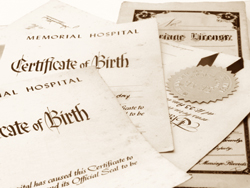
The birth certificate legally documents who a child’s parents are. That is, who the birth mother and birth father are. It is a record of who is genetically related to a child. It is not intended to be a means by which adults decide what they want to be called. Rather, it answers the question, who can this child’s beginning be traced to?d whom? Who gave birth? Who died?

Contrast this bill to what took place in New Jersey last year. The Star-Ledger reported on May 27, 2014: “After 34 years of publicly sharing their deepest feelings and most painful experiences, adoption activists celebrated today as Gov. Chris Christie signed a bill that will enable them to obtain their original birth records, beginning in 2017.”

Why do adoptees want their original birth records? Because these records hold vital information regarding who their birth parents are. They are not a record of who the adults decided would be mother, father, or “parent.”

Those born via anonymous egg or sperm donation share this same desire. They want to know who they came from, who they are biologically related to, who they look like. They do not appreciate the secrets—and oftentimes outright lies—that surround their origins.

One of my favorites lines in Anonymous Father’s Day is when Barry, describing his experience as a donor-conceived person, says, “Secrets are like landmines you know. They can go off at any time, but until they go off you’re sort of treading around them.”

Assemblyman Gomez thinks his new law is modern and progressive, necessary to keep up with the times. He says, “In the long term, this will change the way people view the family structure and view each other. In the future, it won’t be a debate; it will be something that is commonly accepted.”

If we’ve learned anything from the history of adoption, it’s that we can’t just wish away biological origins and simply declare new family structures without impact, particularly on children.

Assemblyman Gomez’s new law will create a new debate. This debate will be lead predominately by those created from anonymous gametes who, no matter what the adults decide, will want to know the truth of who their mother and father are.

They should have access to know the truth. A birth certificate should record the name of the biological mother and biological father of the child, not the wishes of adults.

 

An Open Letter RE: Louisiana SB 162

from Kathleen Sloan, NOW, and Jennifer Lahl, CBC

Members of the Louisiana House of Representatives:

We are writing to urge your rejection of SB 162, a bill that would allow commercial surrogacy or contract pregnancy in Louisiana. The inevitable consequence of this legislation is that it turns women into exploitable commodities through financial inducement that targets young healthy women. SB 162 would entice financially vulnerable women with “reasonable living expenses” in the range of $25-50,000 to undergo medical procedures that pose serious health risks. These procedures involve multiple daily injections of carcinogenic synthetic hormones in order to prepare her body for the transfer and acceptance of an embryo. As Senator Smith said in committee, it turns the woman into an “oven.”

As a national board member of NOW, Kathleen has worked for years against the sexual commodification of women and naturally segued into reproductive commodification. As a nurse, Jennifer is extremely knowledgeable about the medical issues, is the founder and president of a bioethics organization, and has made three documentary films on these subjects, including the award-winning Eggsploitation. We represent the spectrum of women all over this country, pro-choice and pro-life, secular and religious, all united against the exploitation of women as objects for sale.

Commercial surrogacy degrades pregnancy to a service and a baby to a product available to the wealthy. While this exploitive practice is illegal in many countries, in state after state, surrogacy brokers and lawyers who benefit financially from the commercialization of reproduction are behind these bills. Poor and low income women desperate for money are lured to sell their bodies to produce children for others. If passed, Louisiana will join a small group of states like California whose laws give rise to a new profit-driven multi-billion dollar unregulated industry that enriches baby brokers and lawyers at the expense of women.

Lured with the seemingly natural process of providing the “gift of life,” these young women are not aware of the dangers of undergoing multiple injections of synthetic hormones for embryonic implantation. These procedures can have devastating short and long term health consequences. Surrogates are pumped with drugs such as Lupron which is not FDA approved for fertility use; estrogen which is linked to breast and uterine cancers, heart attack, stroke and blood clots; progesterone; antibiotics; and steroids which are linked to high blood pressure, glaucoma, cataracts, peptic ulceration, and an impaired immune system.

Please do not gamble with the health and well-being of the most vulnerable women in your state. We respectfully urge you to defeat SB 162 by Senator Gary Smith.

Kathleen Sloan Jennifer Lahl
National Organization for Women (NOW) Center for Bioethics and Culture
Board of Directors President and Founder


Searching for Family

Several months back, a donor-conceived friend of mine challenged me to undergo DNA testing as part of my ongoing advocacy in the space of anonymous egg and sperm donation.  It was a sort of ‘walk a mile in my shoes’ challenge; see what it’s like to go and search for your family.  I balked at the cost of the testing (although the pricing has really come down) so my friend even footed the bill.

In about a weeks’ time, my home test arrived.  I opened up the package in my kitchen and followed the step-by-step instructions.  Swab the inside of my cheeks.  Carefully put the swaps back in the vials, label them, sign everything and drop the package right back in the mail.  My children were curious and wanted to do the test too.  I told them they could do it if they bought their own kits.  Their curiosity ended then and there.

Then I waited.  And wondered.  I wondered what I would find out about my family tree.  Would there be anyone famous I could now claim as kin?  My maiden name is Chenoweth, so I was sure I would find out that I am related to Kristen Chenoweth!  I had grown up being told that Don Knotts (you know, Barney Fife on the Andy Griffith show) was a distant cousin. I wondered if I would uncover any ugly family secrets I might not want exposed.  I wondered if people had been looking for me, realizing this is a two-way street and that I not only had the ability to find others, but they could find me too.  Maybe I wouldn’t want them to find me.

Soon the day came when my testing was complete and the details were posted on the Family Tree website.  I first contacted the benefactor of my testing kit and got filled in on how to navigate the website, what to look for, and how to make contact with those who came up as ‘connections.’  Then I began the daunting task of slogging through pages and pages of names, names that were listed along with a possibility of related kinship: distant cousin, 3rd-5th cousin.  These were the names of total strangers who shared geographical connections with my relatives, and some even the same surnames.

I began emailing a few, asking how we might be connected.  And I answered emails from others who reached out to me, saying things like:

I received your match request and am wondering how we may be connected.
I’m Chenoweth and Neal on my father’s side and Baker and McKittrick on my
mother’s side. 

I’m still in the process of discovering  my full Family Tree, but I have come to an even greater appreciation for what those in the adoption community and in the donor-conceived population must struggle with every day in their search for family and identity, and the meaning these can bring their lives.  I have the much taken for granted luxury of knowing who my mother and father are, and of knowing my siblings and my extended family.

I can see how, with modern DNA testing, one could spend hours, weeks, months, and even years combing through endless pages of data, looking for that missing link to biological ties.  Each day, with more people being added to the DNA databanks, this search could be never ending—and quite exhausting.

I can’t even begin to imagine the feelings they experience with each passing day, nor the toll this must take on a donor-conceived person’s life and family.  What it must feel like when you’ve found a match—terribly complicated feelings like, should I contact this person?  Will they respond to my inquiry or ignore me?  And then that long dreamed about meeting day.  What will they be like?  Will I look like them?  Will we like each other? I just can’t imagine living each day with so much a part of me being a mystery.

Wanted

No, this is not a tabloid headline you read while waiting to checkout at the grocery store or something you might read on Craigslist in their Help Wanted ads. This was a casual comment by Harvard University’s prestigious geneticist, George Church, made in a recent interview for Germany’s Der Speigel magazine.


Needless to say, Dr. Church caused a media firestorm with this request. Now he claims he was just speculating and was not making a request. His new book, Regenesis: How Synthetic Biology Will Reinvent Nature and Ourselves, has a mention of bringing back Neanderthals. To accomplish this it is simply a matter of fact that an “adventurous woman would be needed” to carry the baby. But just how far-fetched is this idea? In 2009, scientists in Germany reconstructed the Neanderthal genome and boldly proclaimed that with these new technologies (and $30 million) they could produce a living Neanderthal. Fast-forward three quick years and all that seems to be missing is a willing woman to be the surrogate. I suppose the artificial womb will eventually suffice, but it’s still not ready for prime time.

If Dr. Church isn’t inclined to clone a Neanderthal and implant it into a woman’s womb, I am sure there are many who would be. It’s not be far-fetched to imagine a woman willing to sign up to gestate a Neanderthal clone, given society’s proclivity to reality TV and sensationalism, even if only for their 15 minutes of fame. Truth be told, I’d welcome the chance to interview this adventurous woman for my upcoming film on maternal surrogacy.

As scientists pursue this technology in hopes of resurrecting an extinct species or of dealing with endangered species, one has to wonder what limits should be placed on this new science? What are the moral criteria that will be used in making these decisions? And who gets to decide? Our world today faces unprecedented technological changes. Staggering developments in biotechnology offer increasingly greater control over discomfort, disease, death—and over our very selves. But for all the promise of these pursuits, potentially de-humanizing problems emerge, like the ones we can foresee in this new development.

What is the role of medicine here? Clearly, we have long forgotten the deep roots of the Hippocratic tradition in medicine—first, do no harm—in breaking one of society’s most cherished covenants between physician and patient. In this bizarre case, both the pregnant surrogate and the Neanderthal baby would be patients and both would be harmed.

Culture would be harmed as well. The definition of Homo sapiens is blurred, nearly beyond recognition, as we conduct scientific research on human beings, molding them according to our will. This scientific breakthrough would threaten to abolish our own humanity as warned by C. S. Lewis in his great essay, The Abolition of Man.

Make no mistake—my position is not anti-technology or anti-progress, but rather one of questioning progress simply for progress’ sake. Again, what are the ultimate goals, the ends and purposes of this biotechnology and medical progress? Cloning a Neanderthal and impregnating a woman with such a clone is not progress. We must advocate for and demand progress based on rigorous and fact-based biotechnologies and medical therapies that honor and secure human dignity rather than undermine it. We must insist upon virtuous character in both the scientist and physician, and recognize the limits of the natural moral order, which promises us a truly human future, deeply situated in the dignity of the human person.

How undignified it is to treat a woman as a mere tool to gestate a scientific experiment. Have we have worked tirelessly for hundreds of years, advocating for the rights and protections of women and children, only to see stunts like this that strongly degrade the intimate beauty and gift of pregnancy and childbirth, done for novelty and celebrity masquerading as progress?

Biotechnology must reject such freakish carnival sideshow attractions. Instead, we must covenant to practice medicine, biotechnology, and all other sciences with fidelity to one another’s mutual dignity. In the words of Dr. Paul Ramsey, one of the pioneers of bioethics, biotechnology should become “a community of moral discourse”.

There are countless examples of real breakthroughs and real advances that promote and protect human dignity, all for our common good. These advances allow for human flourishing where the boundless scientific imagination is free to soar not only at the laboratory bench, but also the patient’s bedside.

Consider just two examples. Dr. Joseph Lister’s pioneering work in understanding antiseptics led to better patient outcomes because of decreased wound infections. The brilliant and courageous Madame Curie’s, whose discovery of the theory of radioactivity and the early uses of isotopes in treating tumors led to improved cancer treatments and better radiological imaging for diagnostic purposes.

Dr. Church’s announcement is not in the tradition of Lister or Curie. When an announced breakthrough looks and feels like a cheap tabloid magazine headline, you can bet it is not an advancement of true human progress.

This article originally appeared at To The Source and is reprinted with permission.

Alana S. Newman: Shark Tank Girl

When I first met Alana, I was at Columbia University Law School screening my documentary film,  Eggsploitation.  I had done an earlier screening during the day at Fordham University Law School and noted at both of these screenings “they” were following me.  They being the women who typically attend my screenings to give me pushback and reject and/or discount the message of the film, that “donating” (often times it is selling) your eggs is risky and potentially quite harmful to young women.  These women who follow me around are someway involved in the fertility industry.  They are reproductive lawyers, egg brokers, women who they themselves struggled with infertility and used egg donors and/or surrogates to conceive.  Understandably, these women have issues with the film.

But on this particular night, I noticed in the back of the auditorium, a young woman holding up a card board sign which read, Anonymous Us.  I had only recently heard about this website and the project which was being run by this woman Alana S. Newman.  At one point during the Q and A period of the night, Alana raised her hand and was called upon to ask her question.  She challenged the audience to consider the children being created in this enterprise, the children intentionally created and largely separated from their biological mothers and fathers (in the case of sperm donation) and half-siblings.  Her message resonated with many in the audience.  I chatted briefly with Alana after the screening.  She was off to play music at a gig she had that evening and she handed me her music CD which was packaged in a paper bag.  That music I would later use in my next film, Anonymous Father’s Day, which highlights the stories of donor-conceived people – including Alana herself, one of the people interviewed in this film.

The next day, while reading my google alert news on the film, I was mortified to see Alana referred to as “Shark Tank Girl” by one of the women attending the screening.  This woman maintains a blog on third-party reproduction and had attended my screenings at Fordham and Columbia Universities.  She wrote:

I was civil and level, as neutral as I could be in my questioning until Shark tank girl-well ,I only took one little pot shot, couldn’t help it. I asked is there a model by which ART is practiced elsewhere that they think is done according to their standards and that they would consider acceptable and I got an answer that made no sense-it might have, but it was just blah blah blah, nothing substantive. Which was when Shark Tank girl chimed in on how in other countries there is a homestudy done just like they do for adoption, to see if it’s a home and family fit to be parents. My pot shot was-maybe they also do a better job of screening donors too (this girl supposedly passed through and donated twice herself). I reminded the Panel that I was asking about all ART and not just Donors and that in adoption there are different risks & liabilities for placing an existing child compared to who is entitled by law to have children through any form of reproduction.


Why on earth, I wondered, was this woman calling Alana “Shark Tank Girl”?  I couldn’t imagine an older woman calling Alana by such a pejorative name.  I mean, as an older woman myself, watching another older woman ignore this young person’s very real pain and concerns and calling her names?  So I emailed Alana, who gave me the backstory.  Alana had once been invited to speak at a workshop for people considering having children via reproductive technologies – she felt she had been thrown into a shark tank because her message was not well received and she is seen as an enemy of the infertility industry.

Since then, I’ve appeared on the Dr. Oz, addressing these issues, with Alana in the audience.  And of course “they” were there too.  Alana’s attacker wrote again here:

Shark Tank Girl stood up to say that she is 5 months PG, that she has been an Egg Donor and is a Donor Offspring herself, here at The Dr Oz Show to say that Anonymous Donor Conception is wrong because it strips the child of their rightful PARENTAL connection to, you guessed it, the Donor. A parent and a donor are not the same thing. 

Recently, Alana has come under fire again for her latest piece calling out the “new sexual predators” as it relates to older women and gay men needing young fertile women in order for them to have a child.  Of course her analogy went over like a lead balloon within the industry.

Here’s what I know about Alana.  She is strong and powerful and gentle and loving.  She has a heart for people struggling with infertility but wants to be sure we don’t harm others, exploit the poor, see or treat children as commodities in our desire to pro-create.  She’s fearless in her willingness to go anywhere and talk to anyone – even if that means being thrown to the sharks.

Body Parts for Sale

A recent 9th Circuit case legalized the selling of bone marrow, fueling interest, again, in expanding what body parts people can buy and sell.  The sale of human eggs and sperm are already legal – what is next?  Does the creation of a class of persons who generate income by sale (or rental) of their body parts represent advancement for humanity?  ‘We don’t allow people to buy and sell human beings, that’s slavery,’ says Dr. Robert Klitzman, director of the bioethics program at Columbia University. ‘Should we allow people to buy and sell human body parts?'”   

Jennifer Lahl’s personal interview with a young woman who sold her eggs to make money offers one “seller’s” perspective. (Editor’s note.)
 

Lahl: You saw an ad in a local paper looking for African-American egg donors.  The ad offered $6,000 for selling your eggs.  Why did you decide to do this?

Shavonne:* The clinic stated that if my cycle completed, I would receive the total sum of $6,000.  I thought it was a harmless way to make extra money, according to the minimal side effects that they presented during my orientation.  I was 28 years old, and the money motivated me to do this.

 Lahl: When you went to the clinic for the initial screening, you told me that you were one of the only young women there who asked a lot of questions about the risks and the procedure.  How were your questions received?

Shavonne: I was surprised that no one else had any questions at all and that I was the only one asking questions.  I think the clinic personnel felt a little annoyed with me, since I asked so many questions.

Lahl: After you had agreed to sell your eggs, the couple wanting your eggs changed their mind and no longer wanted your eggs.  What did the clinic ask you?

Shavonne: They asked me if I’d be willing to donate my eggs to embryonic stem cell research, and I agreed to that because I didn’t mind them being used for that.

Lahl: So you went ahead with the egg donation procedure, and you had your eggs retrieved on Thanksgiving Day, 2006!  Why that day?  And tell me about how you were feeling at this time.

Shavonne: I took a drug called Follistim to super ovulate me.  The retrieval went fine, but not too long after that my stomach started to swell, and every time I leaned over I could feel my ovaries “plop.”  I went to see the doctor, and he told me I had OHSS, and he then said, “We see girls like you all the time.”  I looked 4 months pregnant.  They told me to go home and eat a lot of protein.  My mother was staying with me at the time, and one night my stomach was so swollen and I could hardly breathe.  My mother said, “That’s enough,” and took me to the emergency room.  The nurse stuck a needle in my stomach, and it was a loud pop I could feel, like a balloon was popped.  She stuck a bag on the end of the needle to drain the fluid, and the bag filled with 2 quarts in about 5 minutes.  She had to quickly put another bag on and some of the fluid spilled on the floor.  She filled the next bag too—in all, 4 quarts were drained out of my stomach.  I stayed in the hospital for 2 1/2 more days while they drained more fluid.  I had a lot of pain in my abdomen.  The staff at the hospital would shake their head at me and took pity on me, because I was an egg donor and they said they saw this a lot.

Lahl: How are things for you now and how is your health?

Shavonne: It took a year and a half to clear up the medical bills.  My menstrual cycles are few and far between.  I was pregnant in 2008, but I lost the baby.  I hope to have children some day, and every time I do have a period, I get really excited because I rarely have them anymore.

Lahl: You told me about your girlfriend, who donated her eggs to her sister, but her sister never used the eggs.  Can you tell me any more of her story? Did she have the same health complications and end up in the hospital with OHSS, too?

Shavonne: Yes, she wants to tell you her story too, so please call her.  Her sister never used the eggs and never offered to pay her medical bills after the OHSS.  She had the exact same symptoms as I had, but the difference was, instead of admitting her to the hospital and draining the fluid, the doctors turned her away.  She had to let the fluid naturally drain from her abdomen.  She said that it took a few months to move around with ease and no pain.  She also stated that she looked 4 months pregnant and had severe lower abdominal pain.  She is currently unable to claim the eggs that she donated and was never compensated monetarily because of her relationship to the receiver.  She also has had a miscarriage since her donor complication.

Lahl: You contacted my colleague, Dr. Jennifer Schneider, because you found her article written about her daughter’s death.  Why did you want to tell your story?

Shavonne: I wanted to share my story because I am still confused and hurt by the situation.  It was a helpless, humiliating experience for me, and I had a hard time finding any information regarding complications from OHSS on the Internet.  I have read many stories regarding young women developing cancers and becoming infertile, and think that this information should be available to the public.  Even after I asked the questions, in the back of my mind I kept thinking that I would be in that small percentage of women, and I was.

Lahl: What would you say to a young woman thinking about donating/selling her eggs?

Shavonne: I would tell these young women that the money is not worth the health risk.  Should they proceed, I would explain the process and my story, and then tell them to do their own research.

Lahl: What do you hope will happen when others hear your story?

Shavonne: I hope that my story and all others will give these women a great depth and detail as to what really happens when you donate, and the causes and risks associated with the medication and procedure in general. My research had gaps in it because the stories of the complications were just not available.

*name changed to protect identity

This article first appeared as “Market Competition Collision: Eggs Needed for Research” in the online newsletter of the Center for Bioethics and Culture.   

Worldwide Eggsploitation: Egg Donation and Exploitation of Young Women Results in Death

For Immediate Release

San Ramon, CA/July 13, 2012News is just breaking in India about Sushma Pandey, a 17-year-old young woman who died in 2010, two days after her third egg “donation.” Her death is being attributed to the procedures used to extract eggs from healthy, desirable young females like Ms. Pandey. These eggs are often resold to affluent westerners for use in commercial production of their children. Her post-mortem report states she had “one abrasion, four contusions and a blood clot in the head, plus six injection marks” as well as “congestion in the ovaries and uterus.” The possible cause of her death was listed as shock due to multiple injuries.

This most recent exposure of the daily exploitation of females offers yet another wake up call to the truth of the real, repeat, and often lethal harms of invasive egg removal procedures, which masquerade under the lie of donation. These transactions are anything but “donations” as young females — nearly children themselves — all over the world, desperately fall prey to offers of money like those made to Ms. Pandey.

Calls for regulation by physicians in India will do nothing to protect young women who seek to “donate” their eggs because they are in desperate need of money. Regulated exploitation is still exploitation — using young women as egg farms for affluent westerners wanting children.

Dr. Allahbadia, one of the drafters of a new Assisted Reproduction Technology Bill, wants to raise the minimum age for egg donors. But how does being older mitigate for the health risks of egg donation? It doesn’t.

Kathleen Sloan, feminist leader and human rights advocate who serves as a special consultant to the Center for Bioethics and Culture (CBC) comments:

“The list of known health dangers to women who provide their eggs is extensive. It includes Ovarian Hyperstimulation Syndrome from the profusion of synthetic hormones and fertility drugs such as Lupron, estrogen (linked to breast and uterine cancers, heart attack, stroke, and blood clots), and progesterone they are injected with; ovarian torsion; and kidney disease — and those are just the short-term risks! How many more women will have to die before India and the United States, the two countries where the out of control fertility industry is allowed to endanger and exploit women unimpeded, take action? No country can claim to respect women’s human rights while simultaneously turning them into commodities subject to life-threatening harms.”

Jennifer Lahl, writer, producer, and director of the award-winning film Eggsploitaiton states,

“What happened to Sushma Pandey is happening to women every day, all over the world. The infertility industry knows the seriousness of the health risks, yet objects to any oversight, to long-term studies, and to regulation, simply because it will compromise their profits.”

For more information, visit Eggsploitation.com

Media Contact: Jennifer Lahl
President, The Center for Bioethics and Culture
+1-510-290-3891
jennifer.lahl@cbc-network.org

Freezers Are For Food

In the world of commercialized conception, it seems we’ve decided the freezer is a great place to keep eggs, sperm, and “spare” embryos until we need them.  We think they do pretty well in the freezer, but the verdict is still out on what happens over the long haul when you freeze and store human reproductive material and nascent human life.  Commercial conceivers simply assume that because we can freeze and thaw our reproductive cells or progeny, it causes no harm or danger.

And not only can we do it; it has become big business.

Case in point: the new fad of egg freezing. It began with the laudable goal of helping the younger woman who was diagnosed with cancer.  A woman facing cancer treatment is at risk for compromised fertility induced by chemotherapy.  Egg freezing was used to try to preserve and protect her fertility, so that after her cancer treatment was completed and her health was restored, she might still be able to conceive — using in vitro fertilization — her own biological child.  It is also used in veterinary medicine to preserve species, especially endangered species.

But this new egg-freezing industry has popped up more and more as a lifestyle choice.  Maybe, baby later. National Public Radio devoted a segment to this fad titled, “Egg Freezing Puts the Biological Clock on Hold.” They reported, “As more women postpone motherhood into their 30s, even 40s, they’re hitting that age-old constraint: the biological clock.  Now, technology is dangling the possibility that women can stop that clock, at least for a while.”

Even grandparents are getting into (and paying for) the act!  The New York Times heralded, “So Eager for Grandchildren, They’re Paying the Egg-Freezing Clinic”!  The story paints this picture, “The gray-haired entourages, it turns out, are the parents, tagging along to lend support — emotional and often financial — as their daughters turn to the fledgling field of egg freezing to improve their chances of having children later on, when they are ready to start a family.”

But of course, the facts seem to get lost in all the hoopla over a newfangled way to manipulate reproduction.

First, there is the pragmatic reality of the cost of this new experimental service.  I called one egg freezing agency in Southern California, and the woman I spoke with was putting the hard sell on me.  I explained I was only writing an article on this and wasn’t interested in this for myself!  The costs are high – meaning if you are poor, don’t even think about freezing your eggs.  It’s about $7,000 to $12,000 to harvest the eggs, and an additional $4,000 to $5,000 later to transfer the embryos into the woman’s uterus once she’s ready to have a baby.  Then there are the fertility drugs to super ovulate the woman in order to maximize the number of eggs retrieve, adding an additional $2,700.  Plus the annual storage fee of $300 to $600.

Then, there are the medical realities.  Nowhere on any egg freezing sites that I visited did anyone disclose the realities of the risks to women and children related to maternal age and pregnancy.  I’ve written before about the risks of advanced maternal age which heightens the risk of “fetal loss” – meaning age increases the likelihood that she won’t carry the baby to term.

One important study noted this stark conclusion:

There is an increasing risk of fetal loss with increasing maternal age in women aged more than 30 years. Fetal loss is high in women in their late 30s or older, irrespective of reproductive history. This should be taken into consideration in pregnancy planning and counseling.

Shouldn’t a technology that claims to be able to put the biological clock on hold be accountable for disclosing the maternal-child health risks to women?

And this is still experimental science.  Even the sites that show their methods and success rates show that this is a field still learning about the best methods and techniques.  Do women really, if properly informed, want to experiment on their future children?  This graph demonstrates the wide range of “success” depending on the freezing method:

I say freezers are for food, like the Thanksgiving turkey, not for our future progeny.

 
View “The Human Egg Freezing Project” on YouTube.


Secret Land Mines

Anonymous Father’s Day “Should be required viewing for anyone considering donating or selling their sperm, as well as for anyone contemplating using this method of conceiving a child.”
  — Kevin D, Sperm Donor

On Father’s Day holiday, we can’t help but think of those who do not know their fathers.  Some don’t know their fathers because they are adopted, because their fathers walked away, or because their fathers have died. But others do not know their fathers because their families have been intentionally structured so that they cannot know him—they were conceived through anonymous sperm donation.

It’s easy to think of sperm donation as nothing more than a way to help infertile couples have a baby.  It can be difficult for those of us who were not conceived this way to understand what it’s like, and how Father’s Day is a time of mixed emotions.

Hundreds of thousands of donor-conceived people have been born, all around the world, in the two hundred plus years that sperm donor conception has been going on.  Only recently have the ethics and the effects of donor conception begun receiving close scrutiny.  Often the questions are being raised by those who know they were donor conceived.

What is it like to grow up not knowing who your biological father is or if you have any half-siblings?  What is it like to find out that the man you thought was your dad is not your biological father, that your biological father donated his sperm and is known only by a number?  What do donor conceived people think about their conception stories, the money aspect of buying and selling sperm in order to conceive them?  And how have the anonymity and secrecy involved in donor conception affected them?

These are the questions that spark the conversation in our film Anonymous Father’s Day.

In the film, we state that it is difficult to know just how prevalent the practice of sperm donation is.  In fact, the latest research shows that it is simply impossible to know how many children are born from sperm donation each year.  The number most often cited is 30,000 per year, but that number is based on an estimate from 1988.  There is do doubt that the practice has increased since 1988, but there is almost no tracking or monitoring of donors or of the children conceived through sperm donation.  We cannot not know the true number.

In addition, sperm donation is a global enterprise.  Sperm from a man inCaliforniais used to fertilize an egg from a woman who lives inEastern Europe.  The resulting embryo is transferred into the womb of a woman inIndia.  A couple travels from their home in London to India for a vacation so that they can be nearby when “their” baby is born.

This convoluted scenario is now commonplace.  Sadly.

Many donor-conceived children are never told their conception story and are not able to be a part of the growing conversation about the practice, ethics, and impact of donor conception.  Those who do know speak of “genealogical bewilderment,” attempting to describe the feelings that come from having little or no information about their donor parent.  They have a deep longing to know where they come from, who they look like, who they belong to. It is a longing to know the missing other half of them.

Unfortunately, when it comes to infertility, family building, and reproductive technologies, the focus is often on those wanting to have a child rather than on the child they want to have.  Reproductive technology has advanced without enough serious reflection on the health and the well being of the children created.  These children wonder if anyone considered them, their needs, their desires.

The conversation around donor conception is growing.  Many donor-conceived people maintain their own active social network communities through blogs and Facebook groups.  Studies such as My Daddy’s Name is Donor and work being done with the Donor Sibling Registry are gathering and examining the experiences of large groups of donor-conceived people.

Donor-conceived people scour the Internet and school yearbooks and cold call fertility doctors and clinics looking for any information or details on their beginnings, their family tree, and medical history.  Many use DNA testing as part of the search for their unknown parent.

While their stories and family situations may be different, the issues surrounding donor conception in the lives of those created this way are often similar.  Many talk about secrets and mystery, about feelings of loss and abandonment, and about wanting to know their biological fathers and that whole side of his—of their—family.

Barry Stevens, one of the donor-conceived people interviewed in Anonymous Father’s Day, captures it well when he says, “Secrets are like land mines, you know.  They can go off at any time, but until they go off you’re sort of treading around them.”

Donor conception impacts not only the donor conceived person, but his or her entire family, and ultimately, all of us.  This Father’s Day let us consider those who have been intentionally separated from the man who gave them life.

Matthew Eppinette contributed to this post; he is the associate producer and co-writer of Anonymous Father’s Day and new media manager at The Center for Bioethics and Culture.

Protect Your Fertility

In my last post, I wrote about women who wait later into life to conceive and find they struggle with what they call “infertility.”  In fact, there is no infertility as a result of aging; rather the biological reality of menopause.  Menopause is a natural and normal event which occurs in a woman’s life, it is not a disease which needs to be treated as most Western medicine does.  Fertility is a natural organic treasure – one that is temporary and unique for each woman.  It can be understood, protected and cared for, just as we try to do for all other aspects of our health and well-being.

The human body is an amazing organism and human reproduction is a finely tuned orchestration of events.  Women would do well to learn more about human reproduction and the sensitive system of fertility so that we can protect and preserve and utilize our fertility and do everything possible to prevent true infertility.  We cannot stop the aging of our bodies and the naturally occurring menopause.  But there is still much we can do to understand and care for the reproductive season of our “fertility” and be sure we can bear children.

It’s a miraculous event that human beings can procreate at all.  While we are not as bad as the koala bear, which has a very low birth rate of typically one baby every other year, human beings aren’t rabbits either.  The female rabbit can produce as many as “800 children, grandchildren and great-grandchildren” in a single mating season!

So, what can you do to protect your fertility?

1.  Do not wait too long if you hope to have children.  Maternal age is a big factor – perhaps the single most important factor – since our fertility dramatically drops as we age.


Maternal age also negatively impacts our ability to carry a baby to term.  This study states, “There is an increasing risk of fetal loss with increasing maternal age in women aged more than 30 years.  Fetal loss is high in women in their late 30s or older, irrespective of reproductive history.” (emphasis added)

Increased maternal age also causes significant risk of maternal morbidity, with the older mother being more at risk for gestational diabetes, having babies born with chromosomal abnormalities like Down’s syndrome, hemorrhage and hypertension.

2.  Know your menstrual cycle and your body.  Understand your fertility the way you understand your food and exercise.  In the best case scenario, a woman has about 5-6 days each month when she is fertile and can achieve pregnancy.  The spread of these few days is dependent not only on when a woman ovulates, but how long sperm can survive and how fast they swim and reach their destination.  This highlights just how finely orchestrated the event of conception is.

3.  Engage in a healthy lifestyle and avoid excess alcohol, smoking and obesity – all have a negative impact on our fertility as does high stress levels.

4.  Avoid contracting sexually transmitted diseases.  The Centers for Disease Control and Prevention states that, “Chlamydia and gonorrhea are important preventable causes of infertility.  Untreated, about 10-15% of women with chlamydia will develop pelvic inflammatory disease (PID).”  They note in 2009, in theUnited States, there were, “1,244,180 chlamydial infections and 301,174 cases of gonorrhea.”  Think about how much these totally preventable diseases negatively impact fertility!  The impact of STDs on fertility is not often shared with young women, particularly by interests (e.g.the media and the sexualization of women) that encourage, support or promote sexual “freedom” and promiscuity for young women.  This is like encouraging girls to smoke because it’s cool and not telling them about the known impacts of smoking upon their short term and long term health.

5.  Avoid being too thin.  Athletes and women with eating disorders are especially  at risk of infertility due to their low body weight and the impact low weight has on amenorrhea – causing a women’s menstruation to stop.

6.  Avoid egg freezing schemes and gimmicks which “promise” you the ability to freeze your eggs so that you can use them later on when you are ready to have a baby.  Egg freezing is expensive and considered experimental.  There are no long-term studies done on the results of the effectiveness of egg freezing and the health of the resulting children and it ignores the serious health risks to older pregnant women.

Human reproduction and specifically, our fertility, really is a gift which needs to be protected and preserved, just as we have learned to protect and preserve the health of our respiratory and muscular systems.  Natural conception, within the normal, timetable of human fertility, is better for the human body, and for the children.  For women who intend to have children, natural conception should be the goal, a goal achieved by understanding and caring for the body and avoiding risk factors including oral contraception.  Oral contraception, like those pills which have been given a Class 1 carcinogen rating by the World Health Organization, might control your fertility for a while, but at the risk of cancers, clots and death.  Why would you take this risk – or any risk – with the precious gift of your fertility?